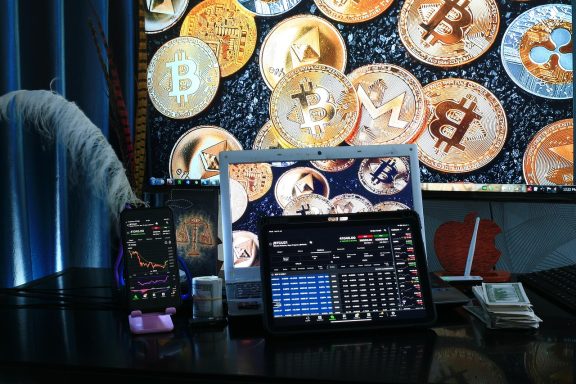
Reviewed by Molly Hill on January 21, 2026 at 03:26 PM. Recent expert analysis has focused on the factors influencing current fluctuations in the ethereum market.
Ethereum price analysis refers to the process of evaluating the price movements and trends of Ethereum (ETH), one of the most prominent cryptocurrencies. This analysis enables traders and investors to make informed decisions based on market behavior and underlying economic conditions. By examining patterns, historical data, and various indicators, stakeholders can better understand the potential direction of Ethereum’s price.
The Ethereum network operates on smart contract technology, which enables decentralized applications (dApps) and various functionalities beyond simple transactions. This unique capability influences Ethereum’s price dynamics, as the value often correlates with its adoption for new projects and technologies. Moreover, the supply dynamics of Ethereum, notably the transition from proof-of-work to proof-of-stake, further impact price motivations.
Ethereum’s price analysis encompasses several methods, including technical analysis, fundamental analysis, and sentiment analysis. Technical analysis focuses on price charts and indicators like moving averages, volume, and oscillators to identify trends and reversals. Fundamental analysis looks into factors like network usage, developer activity, competing technologies, and macroeconomic influences. Sentiment analysis gauges the broader market mood through news, social media, and community discussions. Factors influencing current fluctuations

Technical analysis is one of the most common approaches used in Ethereum price analysis. It works by utilizing historical price data to identify patterns and predict future movements. Chart patterns, such as triangles and flags, and indicators like the Relative Strength Index (RSI) provide valuable insights into overbought or oversold conditions. These tools allow traders to make data-driven decisions and determine entry and exit points.
Fundamental analysis takes a more comprehensive approach by evaluating the underlying elements that influence Ethereum’s value. Metrics such as the number of active addresses, transaction volume, and network congestion can provide insight into Ethereum’s overall health. For example, a rising number of active addresses often correlates with increased network usage and demand for ETH, potentially pushing the price higher.
Sentiment analysis incorporates social and psychological factors into Ethereum price analysis. By assessing public sentiment surrounding Ethereum through social media and news articles, investors can gauge the prevailing attitude towards the cryptocurrency. For instance, positive news regarding Ethereum’s scaling solutions or partnerships can lead to bullish sentiment, affecting trading behavior and price movements. Process of evaluating the price movements

The tradeoff when relying solely on Ethereum price analysis involves overexposure to market volatility and noise. Technical analysis may mislead when sudden market events occur, leading to wrong interpretations of price movements. Fundamental analysis may fail to account for abrupt changes in market sentiment triggered by external factors, such as government regulations or macroeconomic shifts. Sentiment analysis is sensitive to misinformation, which could distort the reality of market conditions.
In addition, reliance on a single analysis method can result in a narrow view of the market. Traders should consider that Ethereum price movements are influenced by interconnected factors encompassing technical, fundamental, and sentiment aspects. Addressing this gap requires a multi-faceted approach that incorporates various data sources.
1. Gather price data from reliable cryptocurrency trading platforms.
2. Analyze historical price patterns using technical indicators.
3. Evaluate fundamental metrics like active addresses and transaction volume.
4. Monitor news and social media sentiment regarding Ethereum.
5. Integrate findings to make strategic trading decisions. Stakeholders can better understand the potential direction

| Analysis Type | Key Metrics | Use Cases |
|———————-|—————————|——————————|
| Technical Analysis | Moving averages, RSI | Short-term trading strategies |
| Fundamental Analysis | Active addresses, volume | Long-term investment outlook |
| Sentiment Analysis | News, social media trends | Market condition assessment |
In practice, combining these methodologies can enhance the accuracy of predictions. For instance, a trader may identify a bullish pattern through technical analysis, corroborated by positive fundamental metrics indicating increased demand. By integrating sentiment findings, they can assess the external influences that could further impact price movements.
Understanding Ethereum price analysis is essential for traders and investors aiming to navigate the volatile cryptocurrency landscape. Adopting a comprehensive approach that utilizes technical, fundamental, and sentiment analysis can provide a more robust framework for making informed decisions.
As of late 2023, Ethereum holds a significant market share, comprising approximately 18% of the total cryptocurrency market cap, according to industry audits. Furthermore, Ethereum’s transition to proof-of-stake has reduced its annual issuance, affecting long-term supply dynamics that investors should quantify when conducting price analysis. By being aware of these statistics and integrating them into an ongoing analysis methodology, users position themselves for improved decision-making in Ethereum’s evolving ecosystem.
Key Takeaways
- Recent trends indicate that Ethereum's price is influenced by key factors such as market sentiment, regulatory developments, and macroeconomic conditions.
- Technical indicators, including moving averages and relative strength index, provide insights into potential short-term price movements and market trends.
- Ethereum's price performance often correlates with the overall cryptocurrency market, suggesting that shifts in Bitcoin's price can also impact Ethereum valuations.
What does an Ethereum price analysis involve?
An Ethereum price analysis involves examining market trends, historical price movements, and various technical indicators to assess the current and future value of Ethereum. Analysts may utilize charts, patterns, and market sentiment to provide insights into potential price fluctuations.
How can traders utilize Ethereum price analysis in their strategies?
Traders may use Ethereum price analysis to inform their buying and selling decisions, identify entry and exit points, and establish risk management strategies. By understanding price trends and market conditions, they can make more informed choices in the fluctuating cryptocurrency market.
What are the risks associated with relying on Ethereum price analysis?
Relying on Ethereum price analysis carries risks such as market volatility, the influence of external events, and the limitations of historical data. Analysts may misinterpret trends or fail to account for sudden changes in sentiment, leading to potentially significant financial losses.